 4.8 | 310 reviews


 972-492-5369
A sewer line usually stays out of sight and out of mind. Most homeowners never think about it until something strange starts happening in the house. Maybe the toilet bubbles when the washing machine drains. Maybe a sink refuses to empty even after you try a plunger. Or worse, a foul smell slowly spreads through the basement.
Those little moments often point to a deeper problem inside the main sewer line.
A sewer inspection is one of the ways to find out what is happening underground without digging up your yard. Modern plumbing cameras can travel through the line and show exactly where the issue is and what caused it. When a problem is caught early, repairs tend to be quicker and far less expensive.
But when should someone call a plumber right away?
Some sewer problems can wait a day or two. Others require immediate attention. Ignoring the warning signs may lead to sewage backups, water damage, or health concerns inside the home.
Let’s walk through how sewer systems work, what causes sudden problems, and the situations that call for an emergency sewer inspection.
How a Home Sewer Line System Works
Your home’s sewer system moves wastewater away from sinks, showers, toilets, and appliances. Every drain inside the house connects to branch pipes, and those smaller pipes lead to a main sewer line that exits the home.
From there, wastewater travels through underground pipes to a municipal sewer system or a septic system.
It sounds simple. Water flows out and disappears. Yet the process depends on clear pipes, proper slope, and a steady path to the main sewer connection.
If something blocks that path, the wastewater has nowhere to go. When that happens, it often pushes back toward the house.
That is why sewer problems rarely stay small for long.
What a Sewer Inspection Actually Shows
Many people picture plumbers guessing where a problem might be. That used to happen years ago. Today, things are much different.
A sewer inspection usually involves a small waterproof camera attached to a flexible cable. The plumber feeds the camera into a cleanout or drain opening and slowly guides it through the pipe.
The camera sends live video to a monitor above ground. This allows the plumber to see exactly what is inside the pipe.
A sewer camera inspection can reveal:
- Tree root growth inside pipes
- Cracked or collapsed pipe sections
- Grease buildup or solid blockages
- Misaligned pipe joints
- Foreign objects stuck in the line
- Pipe corrosion in older plumbing systems
Instead of guessing, the plumber can pinpoint the exact location and cause of the problem.
That clarity matters, especially during an emergency.
Sudden Sewer Backups Inside the Home
One of the most obvious reasons to request an emergency sewer inspection is a sewage backup.
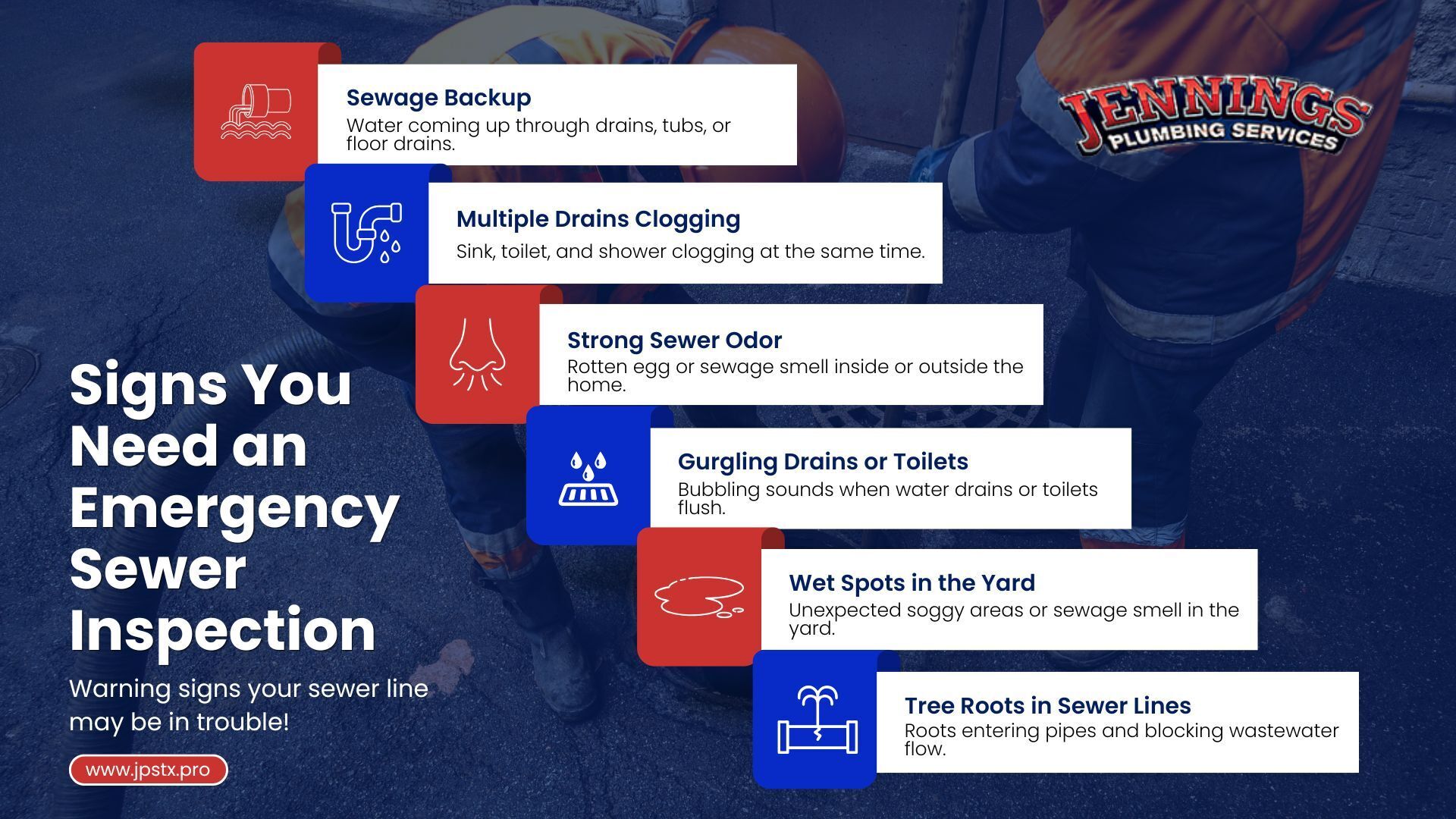
If wastewater starts coming up through drains, tubs, or floor drains, the main sewer line may be blocked.
This situation can escalate quickly. Wastewater carries bacteria and contaminants, and once it enters living spaces, cleanup becomes complicated.
You might notice things like:
- Water rises in the shower when the toilet flushes
- Sewage coming up through a basement drain
- Dirty water appears in the bathtub when the washing machine runs
These symptoms usually mean the main sewer line is restricted.
Calling a plumber right away prevents the problem from spreading through multiple drains in the home.
Multiple Drains Start Clogging at the Same Time
A slow sink drain alone may not be alarming. Kitchen pipes often clog with grease or food scraps.
But when several drains stop working at once, that usually points to the main sewer line rather than a single fixture.
For example:
- The toilet struggles to flush
- The shower drains slowly
- The kitchen sink backs up at the same time
When these things happen together, the blockage is often deeper in the system.
A sewer camera inspection allows a plumber to see where the restriction sits and what is causing it.
Strong Sewer Odors Around the Property
Sewer gases have a very distinct smell. Most people describe it as a rotten egg or sulfur odor.
If that smell suddenly appears inside the home or near the yard, the sewer line may have a crack or leak.
Common causes include:
- Broken underground pipes
- Loose pipe joints
- Dried out drain traps
- Sewer line damage caused by soil movement
An inspection helps determine whether the odor is coming from a damaged sewer pipe or a smaller plumbing issue.
Either way, sewer gases should not linger inside living spaces.
Gurgling Sounds From Toilets or Drains
This one tends to catch people off guard.
A toilet might gurgle when the sink drains. A bathtub may bubble when the washing machine empties.
Those sounds happen when air becomes trapped inside the plumbing system. When the sewer line begins to clog, air pockets move through the pipes and create bubbling or gurgling noises.
It might seem harmless at first.
Still, these sounds often appear before a major blockage develops.
A quick inspection can reveal whether the line is partially blocked and getting worse.
Sudden Wet Spots in the Yard
Sewer problems do not always show up inside the house.
Sometimes the first clue appears outside.
If part of the yard suddenly becomes soggy without rain or irrigation, wastewater may be leaking from a damaged pipe underground.
You might also notice:
- Unusual green patches of grass
- Soil that smells like sewage
- Puddles forming near the sewer line path
These signs often indicate a cracked or collapsed pipe.
An inspection helps locate the exact spot so repairs can begin without digging up the entire yard.
Tree Roots Invading the Sewer Line
Tree roots are one of the most common causes of sewer trouble.
Roots naturally search for moisture. Even a small crack in a sewer pipe can attract them. Once inside, roots continue growing and eventually block the pipe.
This issue is common in older neighborhoods where mature trees sit close to sewer lines.
Root intrusion can cause:
- Recurring drain clogs
- Slow wastewater flow
- Complete pipe blockages
A sewer camera inspection can show how far the roots have spread and whether the pipe still holds its shape.
Old Sewer Pipes Showing Their Age
Homes built decades ago often rely on clay, cast iron, or Orangeburg sewer pipes.
Those materials wear down over time.
Clay pipes can crack under shifting soil. Cast iron pipes corrode and weaken. Orangeburg pipes soften and collapse.
If a home has older plumbing and begins experiencing frequent drain problems, an inspection becomes a smart step.
It reveals whether the pipe is still intact or approaching failure.
Many homeowners schedule inspections during renovations or before selling a property for this reason.
After Major Storms or Ground Movement
Heavy rain can shift soil around underground pipes. Flooding may push debris into sewer systems.
When that happens, pipes sometimes move, crack, or collapse.
If plumbing problems appear after strong storms, a sewer inspection can confirm whether the line has shifted or filled with debris.
Quick action helps prevent larger damage later.
Why Waiting Can Make the Problem Worse
Sewer issues rarely fix themselves.
A small blockage can grow larger as debris collects behind it. Tree roots continue expanding inside pipes. A small crack may widen as soil moves around it.
Waiting often leads to bigger repair work.
Instead of clearing a clog, the repair may involve pipe replacement or excavation.
A timely sewer inspection helps prevent that chain reaction.
What Happens During an Emergency Sewer Inspection
When a plumber arrives for an emergency plumbing inspection, the process usually follows a few clear steps.
First, the plumber locates a cleanout access point. This is an opening in the sewer line that allows direct entry into the pipe.
Next, the camera cable is fed through the pipe while the technician watches the video feed.
During the inspection, the plumber checks for:
- Blockages
- Pipe cracks
- Root growth
- Pipe misalignment
- Corrosion
If a problem appears, the plumber can mark the location above ground using a locator tool.
That information helps determine the most direct repair method.
Sometimes the fix involves clearing the blockage with hydro jetting. In other cases, a section of pipe may need repair or replacement.
How Homeowners Can Reduce Sewer Emergencies
While some sewer problems happen unexpectedly, a few habits help reduce the chances of major trouble.
For example:
- Avoid flushing wipes, paper towels, or hygiene products
- Keep grease and cooking oil out of kitchen drains
- Schedule occasional plumbing inspections for older homes
- Plant large trees away from underground sewer lines
These small choices help protect the plumbing system over time.
Still, even well-maintained systems can develop issues underground.
That is why recognizing early warning signs matters.
When It Is Time to Call a Professional
If drains begin acting strangely, it is easy to assume a plunger or store-bought cleaner will solve the problem.
Sometimes that works.
But when several symptoms appear at once, it is safer to bring in a plumber with proper inspection tools.
A sewer camera inspection provides clear answers instead of guesswork.
For homeowners in North Texas who notice sewer warning signs, a qualified plumbing service such as Jennings Plumbing Services can help diagnose the issue and guide the next step.
Final Thoughts
Sewer lines rarely ask for attention. When they do, the warning signs should not be ignored.
Strange drain noises, recurring clogs, sewage smells, or soggy areas in the yard often point to something deeper inside the main line.
A sewer inspection allows plumbers to see what is happening inside the pipe without tearing up floors or digging blindly through the yard.
Catching problems early often saves time, money, and a lot of stress.
When a home’s plumbing suddenly starts behaving in ways that do not feel normal, it is usually a signal worth checking.


