 4.8 | 310 reviews


 972-492-5369
When summer hits hard in North Texas, it doesn’t take long for the heat to start causing trouble around the house. One issue that often gets overlooked is outdoor pipe damage. If you’ve ever dealt with a cracked hose bib, a leaking irrigation line, or a burst outdoor pipe after a heatwave, you already know how frustrating and expensive it can be.
The truth is, extreme heat can be just as rough on plumbing as freezing temperatures. Pipes expand, materials weaken, and pressure changes can quietly build up until something fails. The good news? Most of these problems are preventable with a little attention and a few smart habits.
Let’s walk through what actually happens to outdoor pipes in hot weather and how you can keep everything running smoothly all summer long.
Why Extreme Heat Is Tough on Outdoor Pipes
It might seem odd at first. Pipes are built to handle water, pressure, and changing conditions. So why does heat cause issues?
It comes down to expansion, exposure, and time.
When temperatures rise, pipes expand. That’s normal. But constant expansion and contraction, especially during long stretches of hot days and cooler nights, put stress on joints and weak points. Over time, that stress can lead to cracks or small leaks.
Then there’s direct sunlight. Pipes that sit above ground or aren’t properly covered can heat up quickly. Materials like PVC are especially sensitive to UV exposure, which can make them brittle.
And finally, water pressure plays a role. Hot weather often means more water use, from sprinklers to garden hoses. That extra demand can push already stressed pipes closer to failure.
The Most Common Outdoor Pipe Problems in Summer
If you’re trying to stay ahead of issues, it helps to know what usually goes wrong.
Here are a few problems homeowners in North Texas run into every year:
- Cracked hose bibs from expansion and pressure buildup
- Leaking irrigation lines caused by shifting soil and heat stress
- Warped or brittle PVC pipes due to sun exposure
- Loose fittings and joints after repeated expansion cycles
- Hidden underground leaks from dried-out soil movement
Some of these start small. A tiny drip here, a slight drop in pressure there. Easy to ignore at first, but they don’t stay small for long.
Start with a Simple Visual Check
You don’t need to be a plumber to spot early warning signs.
Take a walk around your home and look at any exposed outdoor plumbing. Pay attention to:
- Discoloration or fading on pipes
- Small cracks or rough textures
- Moisture around joints or connections
- Pooled water near irrigation areas
It only takes a few minutes, and it can save you from a much bigger repair later.
If something looks off, trust your gut. Pipes don’t fix themselves.
Protect Pipes from Direct Sunlight
This one makes a big difference, especially during peak summer months.
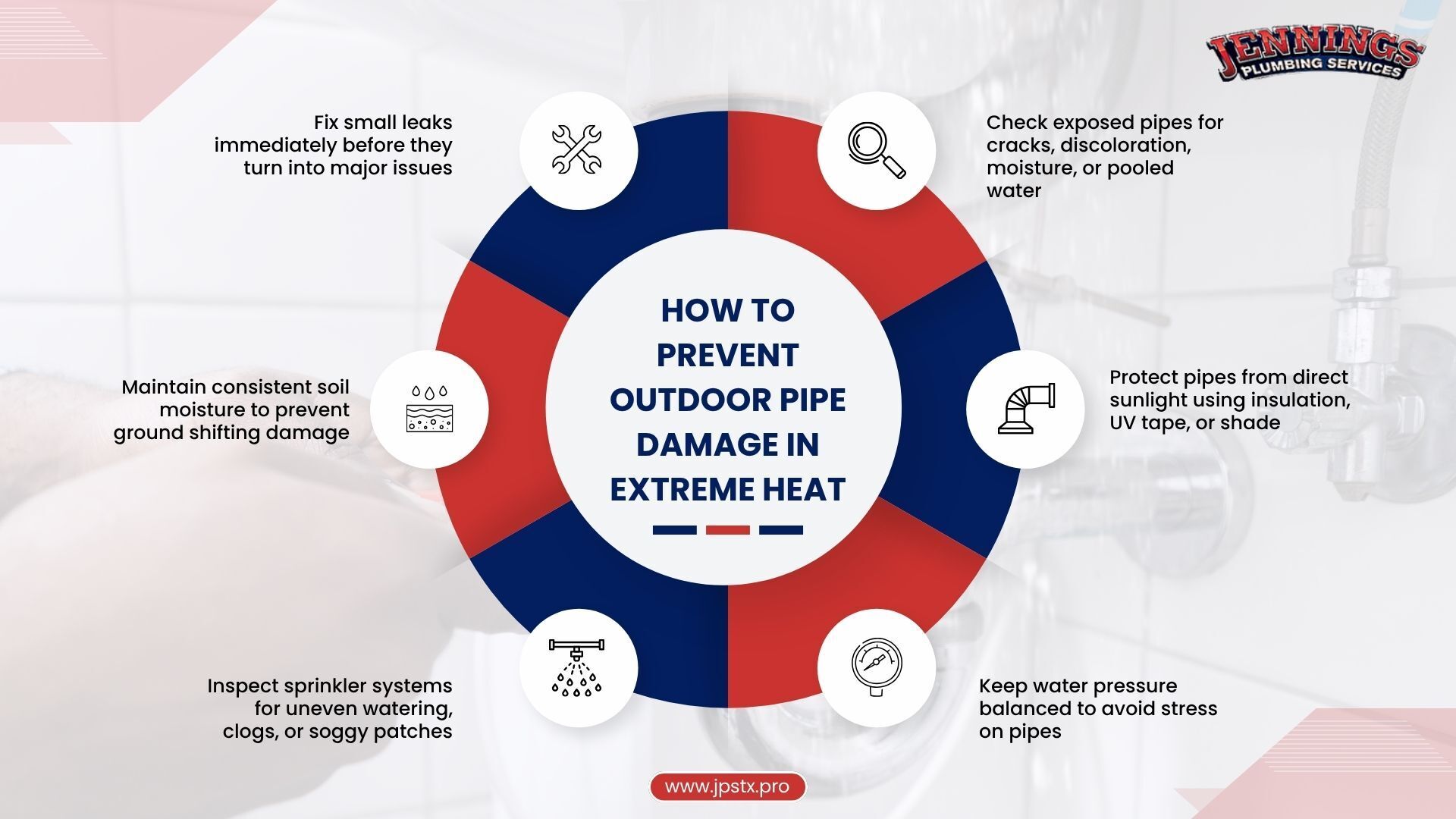
Pipes that sit in direct sunlight all day are much more likely to weaken over time. You can reduce that risk with a few simple fixes:
- Add pipe insulation sleeves designed for outdoor use
- Use UV-resistant tape or coatings on exposed sections
- Install simple shade barriers if pipes are fully exposed
Even a small amount of shade can lower surface temperature and reduce long-term wear.
Don’t Ignore Your Hose Connections
Hose bibs and outdoor faucets take a beating in the summer. They’re used more often, exposed to heat, and sometimes left under pressure for long periods.
A couple of easy habits can help:
- Disconnect hoses when not in use
- Check for slow drips or leaks around the connection
- Avoid overtightening, which can damage threads
It’s one of those areas people forget about until something snaps or starts leaking.
Keep an Eye on Water Pressure
High water pressure might feel great when you’re watering the lawn, but it can quietly strain your pipes.
During hot weather, pressure can increase due to higher demand and temperature changes inside the system. If your pressure is already on the high side, that extra stress adds up.
A pressure regulator can help keep things steady. If you’re not sure what your current pressure is, it’s worth checking. It’s a quick test that can prevent long-term damage.
Take Care of Your Irrigation System
Sprinkler systems are especially vulnerable during extreme heat. They run frequently, often early in the morning or late at night, and cover a large area.
A few smart checks go a long way:
- Look for uneven watering or dry patches
- Inspect sprinkler heads for cracks or clogs
- Watch for soggy areas that could point to underground leaks
Heat can cause the ground to shift slightly, which affects how irrigation lines sit underground. That’s where small leaks often begin.
Be Mindful of Soil Movement
This one catches a lot of homeowners off guard.
In North Texas, the soil expands and contracts depending on moisture levels. During long dry spells, the ground shrinks. When it finally gets water again, it expands.
That movement puts pressure on buried pipes. Over time, it can lead to misalignment or even breaks.
You can reduce the impact by keeping soil moisture more consistent. Regular watering, even outside of lawn care, helps stabilize the ground around your plumbing.
Insulation Isn’t Just for Winter
Most people think about insulating pipes when it’s cold outside. But insulation helps in summer too.
It acts as a barrier against extreme temperatures, both hot and cold. For outdoor pipes, insulation can:
- Reduce heat absorption
- Limit expansion stress
- Extend the life of the material
Look for insulation designed specifically for outdoor conditions so it holds up under sun exposure.
Know When to Call for Help
Some issues are easy to spot and fix. Others are harder to catch, especially if they’re underground or behind walls.
If you notice any of the following, it’s time to bring in a professional:
- Sudden drop in water pressure
- Unexplained increase in your water bill
- Persistent wet spots in your yard
- Visible cracks or active leaks
Getting it checked early can prevent a full pipe failure later on.
For homeowners dealing with recurring issues or older plumbing systems, a quick inspection from a local expert like Jennings Plumbing Services can bring peace of mind before the hottest part of the season hits.
Small Habits That Make a Big Difference
Sometimes it’s not about big changes, just staying consistent with the basics.
A few habits worth keeping:
- Do a quick outdoor check once a month during the summer
- Turn off the water to outdoor fixtures if you’re away for a while
- Fix small leaks right away instead of waiting
- Keep an eye on any changes in water flow
It’s easy to overlook these things, especially when everything seems fine. But small issues tend to show up quietly before turning into bigger problems.
Why Prevention Pays Off
Outdoor pipe damage rarely happens overnight. It builds up slowly, often without obvious signs at first.
By the time a pipe bursts or a leak becomes visible, the damage is already done. That can mean water waste, higher bills, and sometimes even damage to your home’s foundation or landscaping.
Taking a little time to check and protect your pipes now can save you from dealing with a much bigger headache later.
And in a place like North Texas, where summer heat can be intense and unpredictable, staying ahead of the problem just makes sense.
Wrapping It All Together
Extreme heat doesn’t just make things uncomfortable. It puts real stress on your plumbing, especially anything exposed outdoors. Pipes expand, materials weaken, and small issues can turn into costly repairs if they’re ignored.
The good news is that most of this is manageable. A few simple checks, some basic protection, and a bit of awareness go a long way.
If you ever feel unsure or notice something that doesn’t seem right, it’s worth getting a second opinion. Jennings Plumbing Services works with homeowners across North Texas and understands exactly how local conditions affect outdoor plumbing systems.
Staying ahead of heat-related pipe damage isn’t complicated. It just takes a little attention at the right time.


